
Inconspicuous Games
The Safest Way to Feel Like a Troublemaker

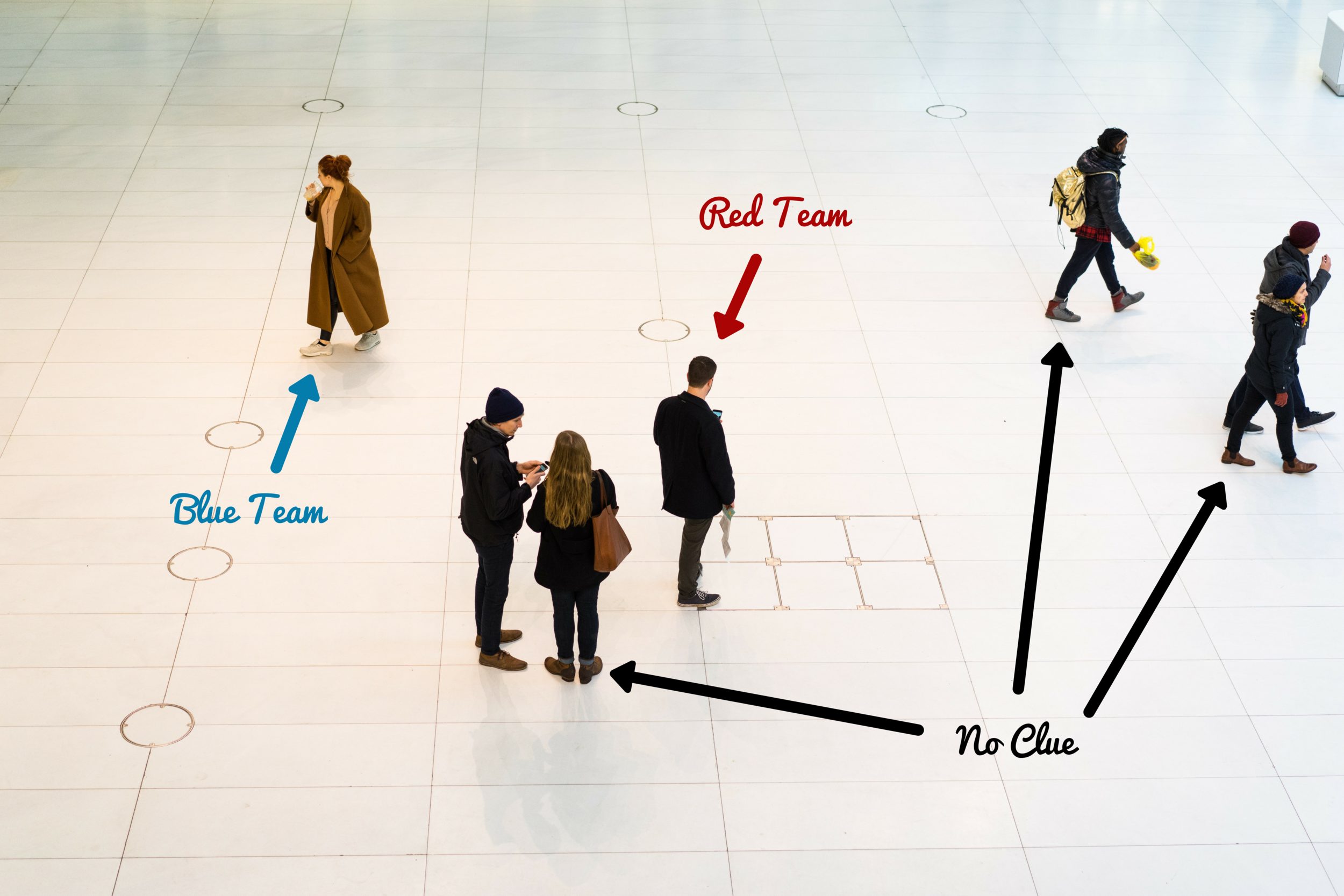
In a conference room in a high-rise building in Midtown Manhattan, a group of twenty Morgan Stanley financial advisors eagerly crowded around me. Their eyes already twinkled as I handed out tiny lapel pins, red for one team, blue for the other. An undeniable energy coursed through the room where I had just laid out the afternoon’s agenda: a secret, high-stakes game of Capture the Flag inside one of New York City’s most iconic landmarks, Grand Central Station.
If you’re familiar with this historic building, picture it as a playing field: a symmetrical space with a clear middle line marked by the famous Information Booth. While it might not seem like an obvious venue, it’s surprisingly well-suited for a game because of its spacious layout and abundance of commuters, all the better to hide in plain sight across multiple floors.
(Refresher: Capture the Flag is a kid favorite at summer camps and field days. Players are split between two teams with the main objective being to capture the opposing team’s flag from the other side of the field without getting caught.)
I loved Capture The Flag at summer camp, when I was 12 years old, and the entire outdoor landscape transformed into a battlefield. That’s around the age most people stop playing. Even though the game delivers the kind of physical intensity, psychological payoff, and other benefits found in lots of recreational sports (think about all those adult kickball and dodgeball leagues that have sprung up in the past several years!), you don’t see groups of adults revisiting Capture the Flag. At some point, we lost that desire to be spontaneously playful. That loss can happen quietly and without ceremony.
But Sam, my husband, loved organizing Capture the Flag games in our local Brooklyn park. He saw it as a deliberate and memorable way to bring people together. On a visit to the Metropolitan Museum of Art in 2016, we joked that the Sackler Wing (home to the imposing Temple of Dendur) would make a perfect playing field with clear borders and a centerline. The idea of a classic game played in a novel place presented both a challenge and an invitation to ourselves that we couldn’t resist.
So with a little effort and creative thinking, we developed a version of the game that could work within the constraints of that venue. In order to pull it off without setting off alarms (literal or social), we had to rewrite the rules. Namely, the game had to happen completely in secret… no guards, docents, or museum visitors could catch on. Only the handful of players would be part of the experience.
One Saturday that May, we gathered twenty friends, explained our modified rules, and played Capture the Flag in secret with the Temple of Dendur as our backdrop. No running. No lunging. No yelling. The objective remained the same: capture the flag from the opposing team without getting caught. But in this version, the real challenge wasn’t avoiding the other team… it was blending in. Participants had to move through the space without attracting attention. If traditional Capture the Flag felt like soldier training, this one was designed for spies.
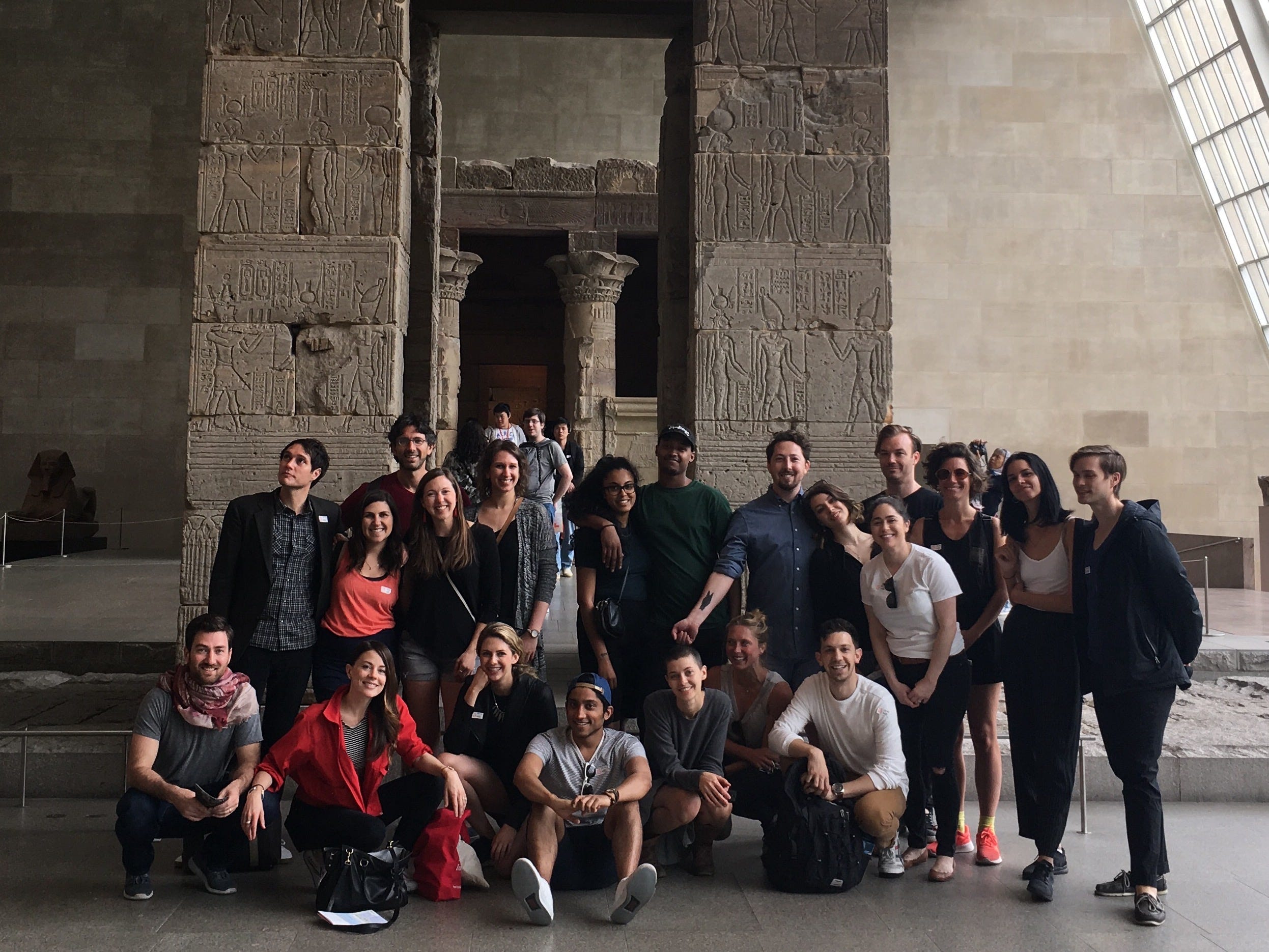
It was a hit. We felt like we had pulled off a heist… without breaking any rules. When done right, there was no risk of being caught as the players were masked as art appreciators. Sam and I called it “Inconspicuous Games”.
We turned more and more landmarks into venues, like the Bryant Park Public Library, the Oculus, Grand Central, Time Warner Center, even the Staten Island Ferry. More friends wanted in. We sold tickets to the public, and eventually, we secured permission to officially run the games in several venues. We ramped up the branding when corporate teams started to reach out. Soon, we were running this absurd game for teams from Uber, LinkedIn, and yes, even Morgan Stanley wealth managers.
This well-known children’s game (along with our sneaky modifications) had turned into something that was bringing adults together in ways we hadn’t expected. While the adrenaline and fun made Inconspicuous Games an easy sell, the real, unexpected result was the way it changed how people related to one another. There was a subtle shift in group dynamics and new, surprising connections formed between friends or colleagues that elevated the game from a topical team-building offering to something much more substantial.
In a typical game of Capture the Flag, the loudest, alpha players take the lead, just like we see in real life. But in this version, it’s the quieter folks who thrive. Teams must rely on new forms of communication, sometimes led by the very people who rarely speak up. What we loved hearing after we ran games with multiple companies was that the shift didn’t end when the game did. Managers reported those new dynamics often carried back into the workplace. The game gave people a chance to lead differently, listen differently, and return to their world just a little more awake. One player said, “It felt like pulling off a secret mission with your coworkers. Strategic but childlike in the best way. And for many of us, it was the most fun we’d had in years.”
Looking back, three things made Inconspicuous Games more than just a game:
Play was the structure and not just a decorative layer. It gave participants a reason to take low-stakes risks… the kind we rarely allow ourselves as adults. Constraint shaped the entire experience. Without the ability to run, yell, or draw attention, we had to reimagine every move inside tight boundaries.
And most critically, this particular game was an invitation. Participants had to opt in, agree to the terms, and help sustain the illusion. The game wasn’t something that happened to them, but with and through them. It only worked if they helped pull it off. If you’re not given an invitation to participate, you’re much more likely to stay on the sidelines. A carefully-crafted invitation that says, I’ve got you, you’re safe here can give people the green light to shed the hard shell of being a “responsible adult”.
When you design with this kind of intentionality, even the most familiar spaces can transform. And the playing doesn't have to end just because the game did. Sam and I would joke with participants that if they ever spotted someone out in the wild wearing one of those tiny lapel pins, they could tag them… a little signal between strangers that they were in on the same secret. Finite game, infinite invitation. That's what I'm really after: designing experiences that leave people a little more awake to the world around them, long after they've gone home.
Super cool! BTW, my milestone bday party turned out amazing, filled with connection and joy! Thanks for planting the seeds.
Well said Molly!